Route framing
We describe distance bands, likely pauses, and where foot traffic tends to bunch—so you can plan breaks without treating any single day as a template. Weather, roadworks, and events will always shift the feel of a street.
London · walking · rhythm
We help you plan calm, well-paced walks that follow everyday patterns of movement—crossings, arcades, quieter stretches, and the small changes in sound and light that make one block feel different from the next. Nothing here is about speed records or dramatic transformation: it is about noticing what is already there.
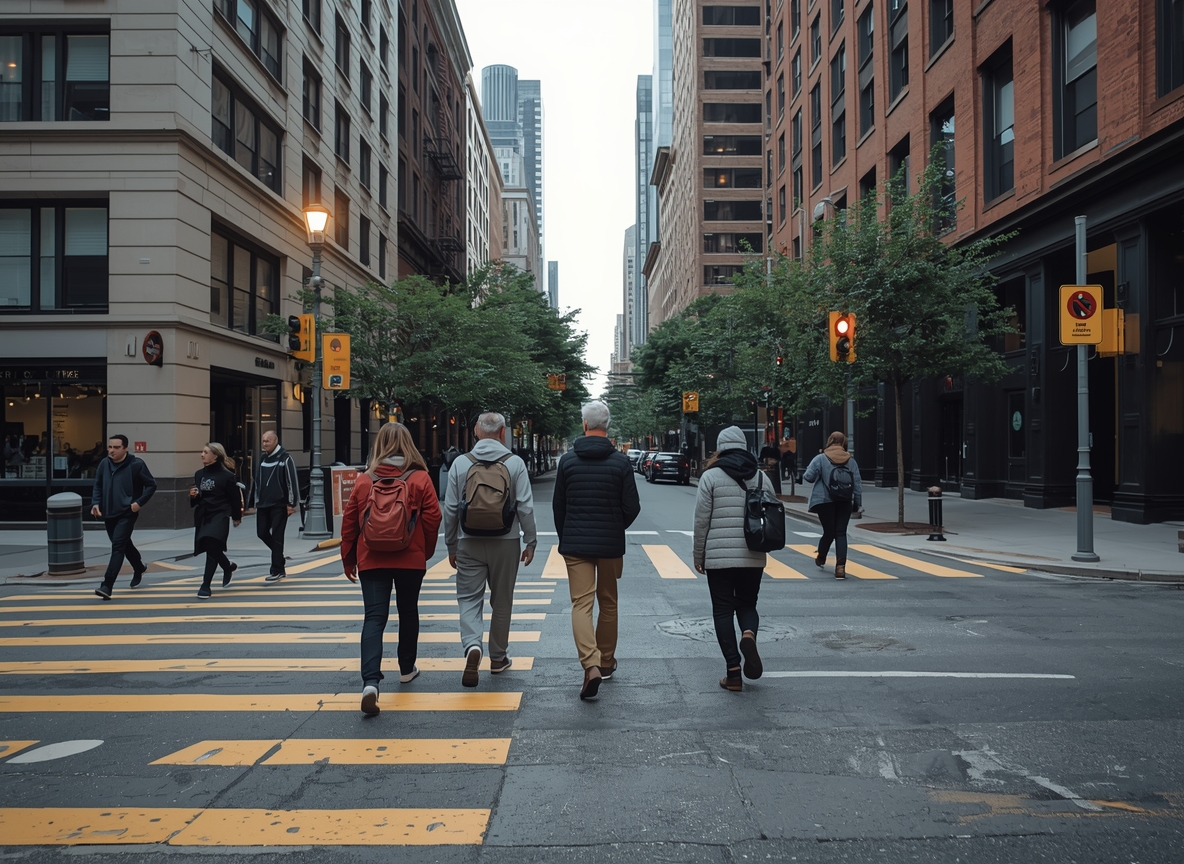
We describe distance bands, likely pauses, and where foot traffic tends to bunch—so you can plan breaks without treating any single day as a template. Weather, roadworks, and events will always shift the feel of a street.
Light on brick, reflections in shop glass, the way sound bends at corners: observational prompts that stay neutral. We avoid telling you what you ought to feel; we point at patterns many people notice when they slow down.
Morning deliveries, lunch queues, evening lamps—each adds a different tempo. Our notes name those bands in plain language so you can match a walk to the window you actually have.
We refer to crossings, shared surfaces, and tactile paving where it helps orientation. We do not provide health or therapeutic advice; we stay in the realm of planning and spatial description.
Streets change. A quiet corridor one season can feel busier the next. We prefer clear uncertainty over polished certainty—so you can adapt on the day.
Every pavement has a pulse you can learn to read: not as music, but as sequence. Signals phase; shop shutters lift; school zones fill and empty. Walking well is partly about expecting those shifts so you are not surprised when the pavement narrows or when a queue spills from a doorway.
We write for people who commute on foot, who run errands between meetings, and who sometimes walk simply to move without a performance goal. The same street at eight in the morning and eight at night is not the same street—and that difference is worth describing without exaggeration.
If you want a single idea to take away, let it be this: rhythm is descriptive, not prescriptive. It helps you compare one block to the next. It does not rank people, and it does not promise a particular mood.
Cool air, longer shadows, and the first buses setting the beat. Good for straight segments where you want to see signage and crossing markings clearly before crowds build.
Footfall thickens; cafes open onto the pavement. Useful if you enjoy short pauses and do not mind weaving slightly to keep a steady line.
Lamps define edges; shop windows add pools of colour. Helpful when you want well-lit approaches before turning into quieter residential stretches.
Sparkghankle is a small studio. We answer enquiries thoughtfully rather than instantly, and we keep correspondence focused on your question—route ideas, collaborations, or clarity about our materials. Our address is Montfichet Rd, London E20 1EJ, United Kingdom; we publish email and phone alongside every page footer for transparency.
When you read our City Walks and Streetscape sections, you are reading structured observation, not a catalogue of promises. Use them as scaffolding, then adjust for weather, mood, and the specific hour you step outside.
We do not need a perfect plan—just a neighbourhood, a time window, and what you hope to avoid or include.